
The Complete Guide to Corporate Video Production
91% of businesses use video, but ROI satisfaction just dropped from 93% to 82%. Here's the complete guide to corporate video production: types, process, cost, and how to measure it.
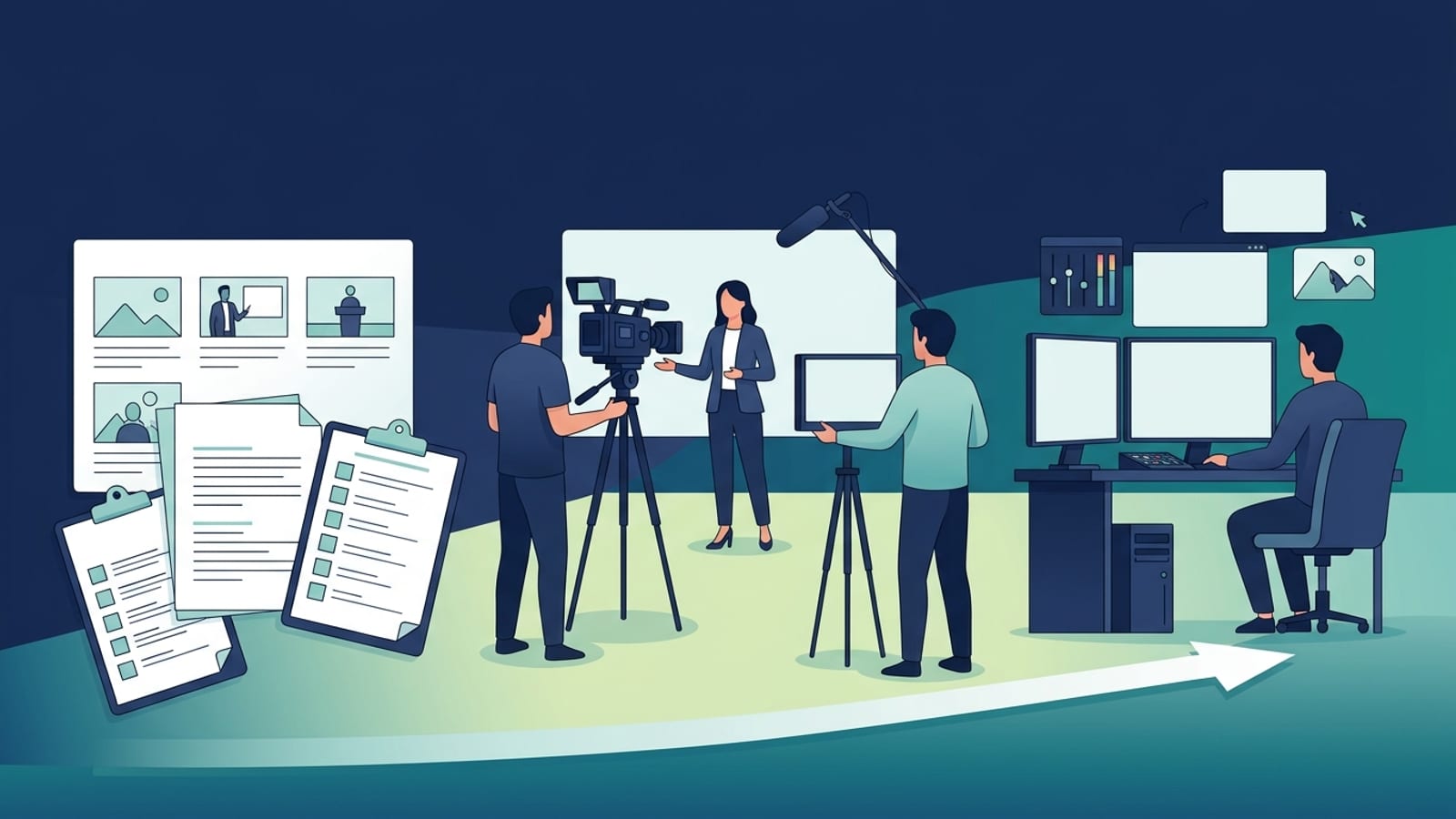
Table of Contents
Why Corporate Video Matters Now
Video marketing has become close to universal. Wyzowl's 2026 State of Video Marketing report found that 91% of businesses now use video as a marketing tool. 83% say video has directly increased sales. That's a real, measurable outcome. Not just a trend businesses feel pressure to follow.
But high adoption doesn't mean high quality. Satisfaction with video ROI actually dropped this year, from 93% down to 82%, per the same report. More businesses are making video now. A lot of it isn't very good. That makes understanding the process, the cost, and who you hire more important than it used to be.
What Counts as Corporate Video Production
Corporate video isn't one type of content. Different needs call for different approaches. It helps to know which type you're actually working on before you start.
Brand and Marketing Video
Brand and marketing video is built to sell. That includes product explainers, company overviews, and promo content for social media or paid ads. This is the type most people picture when they hear "corporate video." It's usually the most performance-driven. The goal is a specific business outcome, like leads or sales.
Training and Onboarding Video
Training and onboarding video needs clear pacing and structure, not flashy editing. The goal is understanding, not entertainment. A confusing training video fails at its one job. No matter how polished it looks.
Internal Communications Video
Internal communications video, like a CEO update or a company-wide announcement, needs to feel authentic. Not overproduced. Employees can tell when something feels like a marketing video dressed up as an internal message. That usually backfires.
Testimonial and Case Study Video
Testimonial and case study video needs an editor who can pull a real story out of a raw, unscripted interview. That's a different skill than scripted brand work. It's closer to documentary editing than commercial production.
Event and Conference Video
Event and conference video, recap reels, keynote highlights, panel clips, needs an editor who can turn hours of raw footage into a tight, usable piece fast. Often on a tight post-event deadline. This type rewards speed and good judgment more than any other.
Knowing which type you need before you start a project changes who you should hire. It also changes what a good result actually looks like.
Where the Video Actually Lives Matters
Where a video lives matters as much as how it's made. Short-form video, generally under 60 seconds, now gets roughly 2.5 times more engagement per view than longer formats. This comes from several industry studies. That's a real shift in how people watch video. Not just a platform trend. Vertical video, built for a phone screen, also tends to beat horizontal video on social platforms. Most viewing now happens on a phone held upright.
That doesn't mean every corporate video should be short and vertical. A training video or a full product demo often needs the length to actually explain something. But a marketing clip meant for LinkedIn or Instagram should usually be built short and vertical from the start. Not repurposed later from a longer piece. Plan the format before production starts, not after. That's one of the clearest differences between video that performs and video that doesn't.
The Corporate Video Production Process, Start to Finish
A typical corporate video project moves through four stages. Whether it's one video or a full campaign.
Planning and Pre-Production
Planning and pre-production comes first. This is where goals, messaging, format, and scope get defined. Before a single frame is shot or edited. Skipping this step is the most common reason projects go over budget or miss the mark.
Filming (When It's Needed)
Filming comes next, if the project needs new footage instead of existing assets. This includes location scouting, shot lists, and the shoot itself.
Editing and Post-Production
Editing and post-production is where raw footage becomes a finished video. This includes cuts, color grading, sound design, motion graphics if needed, and putting it all together into one piece.
Revisions and Final Delivery
Revisions and final delivery close out the process. A clear revision policy, agreed on upfront, is one of the biggest factors in whether a project finishes on time and on budget.
A standard single video typically takes 2-5 days to edit once work starts. The full process for a typical corporate project, from kickoff to signed-off final file, usually runs two to four weeks.
How to Choose Who Actually Makes It
Choosing who actually makes your video matters as much as the process itself. Look for a portfolio that matches your specific type of video. A clear revision policy stated upfront. Realistic turnaround times. And results you can actually check, not just a polished reel.
For the full breakdown of what to look for, the questions to ask before you sign, and the red flags to watch for, see our complete guide: How to Choose a Corporate Video Production Company.
In-House, Freelance, or Agency: The Real Cost Comparison
One of the biggest decisions in corporate video production is who does the actual work. An in-house hire. A freelancer. Or an agency.
A full-time in-house video editor typically costs $75,000-$125,000 a year. That's once you count salary, benefits, payroll taxes, and equipment. Not just the base wage. The median annual wage for film and video editors was $70,980 in May 2024, per the U.S. Bureau of Labor Statistics. Hiring also takes time. Indeed's hiring data shows it takes 46 days on average to fill a video editor role. That's before the person even starts making anything.
Freelancers typically charge $15-150 an hour, depending on experience. Agencies charge more. Usually $100-250 an hour, or a retainer between $1,000 and $5,000 or more a month, depending on volume.
Per-project pricing gives another useful reference point. Industry cost data puts the median cost of one finished minute of video, once AI tools are part of the workflow, at roughly $2,500. That's down from about $4,200 a couple of years ago. That drop is real. But it doesn't mean every video should cost that little. A quick social clip and a full brand film with location filming and custom motion graphics land very differently. Even from the same production partner.
For the complete cost breakdown, including when in-house actually makes financial sense and when it doesn't, see: In-House Video Editor vs. Agency: What Actually Costs More?
Where AI Fits Into Video Production Now
AI tools have become a real part of video production now. Wyzowl found that 63% of video marketers use AI tools somewhere in their workflow. Most often for rough cuts or transcription. This isn't replacing editors. It's speeding up parts of the process that used to eat hours of manual work. It's also a real reason per-minute production costs have come down industry-wide. The skill that makes a video actually good still comes from a person. That means knowing which cuts serve the story. And which just save time.
Common Mistakes in Corporate Video Production
Even experienced teams make the same handful of mistakes on corporate video projects.
Skipping a real script or outline is one of the most common. Winging a shoot with no clear plan for what to say leads to expensive reshoots. Or a weak final cut stitched together from footage that doesn't quite fit.
Optimizing for the wrong platform is another. A video built for a wide landing page rarely works the same way once it's cropped down for a vertical feed later. Plan the format before filming, not after.
Skipping a revision process, or leaving it too loose, causes budget overruns more than almost anything else. Agree on the number of rounds up front. And what counts as a revision. Do this before the project starts. Not once the first draft is already in your inbox.
And treating the final video as the finish line, instead of the start of measuring results, means most businesses never actually learn whether the investment worked.
How to Measure ROI on Corporate Video
A video isn't done delivering value once it's published. Tracking what it actually does matters as much as how it looks.
For marketing video, watch engagement, click-through rate, and conversion data in the weeks after it goes live. Not just views in the first 48 hours. A video with a lot of views but no real action isn't actually working. Even if it looks like a success on the surface.
For training video, check whether it actually cut down onboarding time or repeat questions from new hires. That's a harder number to track than views. But it's the one that actually matters for that type of video.
For internal communications video, watch whether the message actually landed. Look at follow-up questions, survey feedback, or whether people actually did what was asked. A CEO update nobody references again probably didn't do its job.
Set what you're going to measure before the project starts. Not after it's already live. A good production partner will help you think this through as part of planning. Not leave you guessing once the video is out.
Across a set of corporate video campaigns we've run, we've seen results like $83,000 in total ad spend turn into a 5.9x average return. That included 7.4 million total reach and a 498% average rise in conversions. Numbers like that come from strategy and execution working together. Not just a well-edited final cut.
Building Video Into an Ongoing Strategy
Video that works over time, instead of one strong piece followed by silence, usually comes from a real plan. Not a one-off project mindset. Pick a realistic pace, monthly, quarterly, or tied to specific business moments like launches or hiring pushes. That matters more than any single video's production value. A modest, steady output tends to beat one expensive video that never gets a follow-up.
Work With Digital Lab
This is exactly what our video editing services are built around. We handle brand, training, internal communications, and testimonial video. With a dedicated team instead of a single point of failure. And a real process from planning through delivery.
Conclusion
Corporate video production isn't one thing. Neither is the right way to approach it. What you're making sets the skills you need. Where it lives sets the format. Your volume sets whether in-house, freelance, or an agency makes sense. What happens after it's published sets whether the investment was worth it. Get the type, the format, the process, and the partner right. Corporate video becomes one of the more reliably effective things a business can invest in.
Frequently Asked Questions
Corporate video production is the process of planning, filming, and editing video for business purposes, including marketing, training, internal communications, and testimonials. It covers everything from a single product video to an ongoing content program.
Freelance editors typically charge $15-150 an hour. Agencies charge $100-250 an hour or work on a monthly retainer between $1,000 and $5,000 or more. A full-time in-house editor costs $75,000-$125,000 a year once you count salary, benefits, and equipment.
A single video typically takes 2-5 days to edit once work starts. A full project, from kickoff to final delivery, usually takes two to four weeks depending on complexity and how much filming is involved.
It depends on your volume. In-house makes sense if you need daily or near-daily video and it's core to your business. Freelancers work well for single projects. Agencies fit most businesses producing a steady but not constant stream of video.
Yes. According to Wyzowl's 2026 data, 91% of businesses use video marketing and 83% say it has directly increased sales. Adoption is now close to universal, which makes quality and strategy matter more than simply having video at all.
Corporate video specifically serves a business purpose, marketing, training, internal communication, or testimonials, and is usually judged on a business outcome, not just visual quality. General video editing can serve any purpose, with different success criteria.
It depends on where it's used. Short-form, generally under 60 seconds, generates roughly 2.5 times more engagement on social platforms. Training and product demo content often needs more length to actually explain something clearly.
The most common mistakes are skipping a real script or plan, optimizing for the wrong platform format, leaving the revision process undefined, and treating the finished video as the end of the project instead of the start of measuring results.